
Where GDC Releases Go
A Stewart County defendant may enter GDC after sentencing in Superior Court. At that point the Sheriff's Office is no longer the main custody authority. Release from state prison may lead to the community with no correctional supervision, parole supervised through the Georgia Department of Community Supervision, or another lawful custody arrangement. The GDC record documents the prison stage, while the Parole Board and DCS document different parts of parole decision and supervision.
A transfer from Stewart County Jail into GDC is not a release to the community. It merely changes custodians. Likewise, an actual release from GDC does not prove that every court duty or supervision term has ended. Read the state prison status first, then check parole or probation only when the case calls for it.
Confirm a GDC Release
Open the official GDC Find an Offender page and follow its link to the direct query. Search by exact name, GDC ID, or case number. Use inactive and sentence-status options when looking for a person who has already left prison. Compare age, physical description, GDC ID, conviction county, offense, and sentence history before relying on a result.
- Search the person's exact name, then narrow with ID or case number if known.
- Compare identity and confirm Stewart as the conviction county when appropriate.
- Read current status, active or inactive status, and sentence status together.
- Compare actual release date with max possible release date.
- Check the Parole Board when the record refers to parole or TPM.
- Request written verification from GDC Inmate Records and Information when needed.
The Stewart County release-search guide helps determine whether GDC is the right system at all. A person released on bond from the county jail may have no GDC record.
GDC Release Search Fields
GDC provides more sentence detail than a live county roster. For released-person work, inactive status and the actual date are often more useful than a current institution field.
| Field | How to read it |
|---|---|
| Current status | Shows the present GDC status label. |
| Active or inactive | Helps find people no longer active in prison custody. |
| Actual release date | Documents the completed GDC custody event. |
| Max possible release date | Shows the outside sentence date, not a parole promise. |
| Most recent institution | Identifies the latest GDC placement. |
| Conviction county and case | Connects the record to the Stewart County sentence. |
| Incarceration history | Separates multiple custody periods. |
A photo may appear automatically when available, but identity should never rest on the image alone. Names and physical descriptions can be similar. Match the stable identifiers and the sentence.
GDC Actual and Maximum Dates
Actual release date and max possible release date answer different questions. The actual date confirms a completed GDC custody event. GDC defines Max Out or MRD as the date when the judge's sentence will be completely served. That maximum field is not a scheduled parole date and should not be reported as one.
The Parole Board uses TPM, or Tentative Parole Month. A TPM is not a final parole decision. It marks when the Board expects to finish final review and, if appropriate, set a parole release date. Conduct or program conditions can affect it, and misconduct may postpone or cancel it. The three fields form a sequence, not interchangeable dates: MRD is an outside sentence date, TPM is a review marker, and actual release date records the event afterward.
Verify Stewart GDC Information
GDC warns that its public information is not warranted as accurate or complete. It directs users to verify facts by written correspondence with Inmate Records and Information at P.O. Box 1529, Forsyth, GA 31029. A written request should name the person, GDC ID, case, conviction county, and the precise status or date needing confirmation.
For questions about a loved one, GDC lists 404-656-4661. General GDC mail on agency pages uses 300 Patrol Road, Forsyth, GA 31029, while the search disclaimer gives the separate post-office box for records verification. Use the address tied to the task.
The official GDC offender information page shown below provides the agency route into offender services.
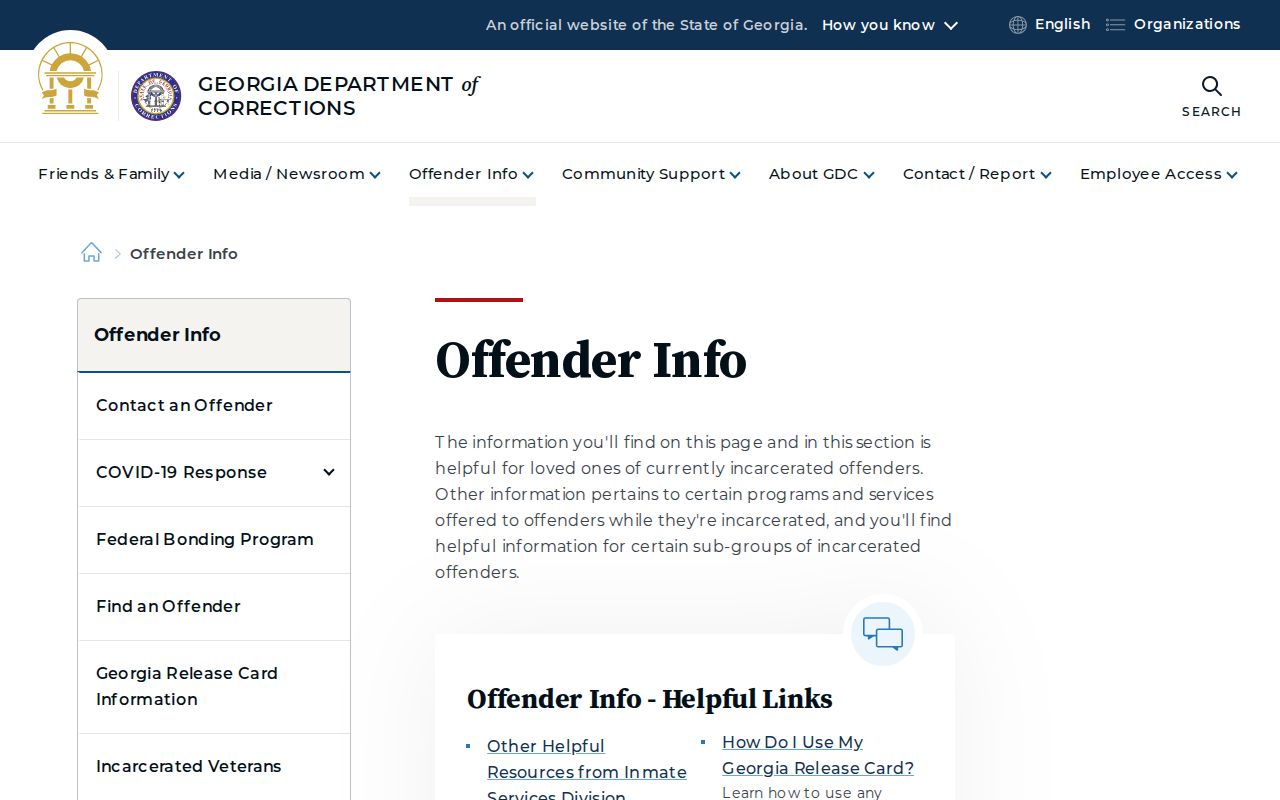
This page supplies context; the direct offender query is the person-level search.
Stewart Releases Under Supervision
Georgia separates the release decision from supervision. The State Board of Pardons and Paroles makes parole decisions and publishes TPM and parolee tools. DCS supervises felony probationers and parolees in the community. Stewart County is served by the DCS Americus Field Office at 108 E Lamar Street, Americus, GA 31709, phone 229-931-2537, weekdays from 8:00 a.m. to 4:30 p.m.
Parole is conditional release from a prison sentence. Probation is a court-ordered community sentence or part of a sentence and need not follow prison. Discharge means the relevant custody or supervision term has ended. An actual GDC release date alone does not show which of those statuses now applies.
GDC Records and Contact
Use the direct offender search for public status, the written records channel for verification, and the Parole Board or DCS for their separate functions. Do not route a short county-jail release to GDC unless the person also has a state-prison history.
Georgia Department of Corrections
Offender search: Find an Offender
Direct query: GDC Offender Query
Questions: 404-656-4661
Written verification: Inmate Records and Information, P.O. Box 1529, Forsyth, GA 31029
The GDC questions page is pictured below and points families toward the correct agency contact.
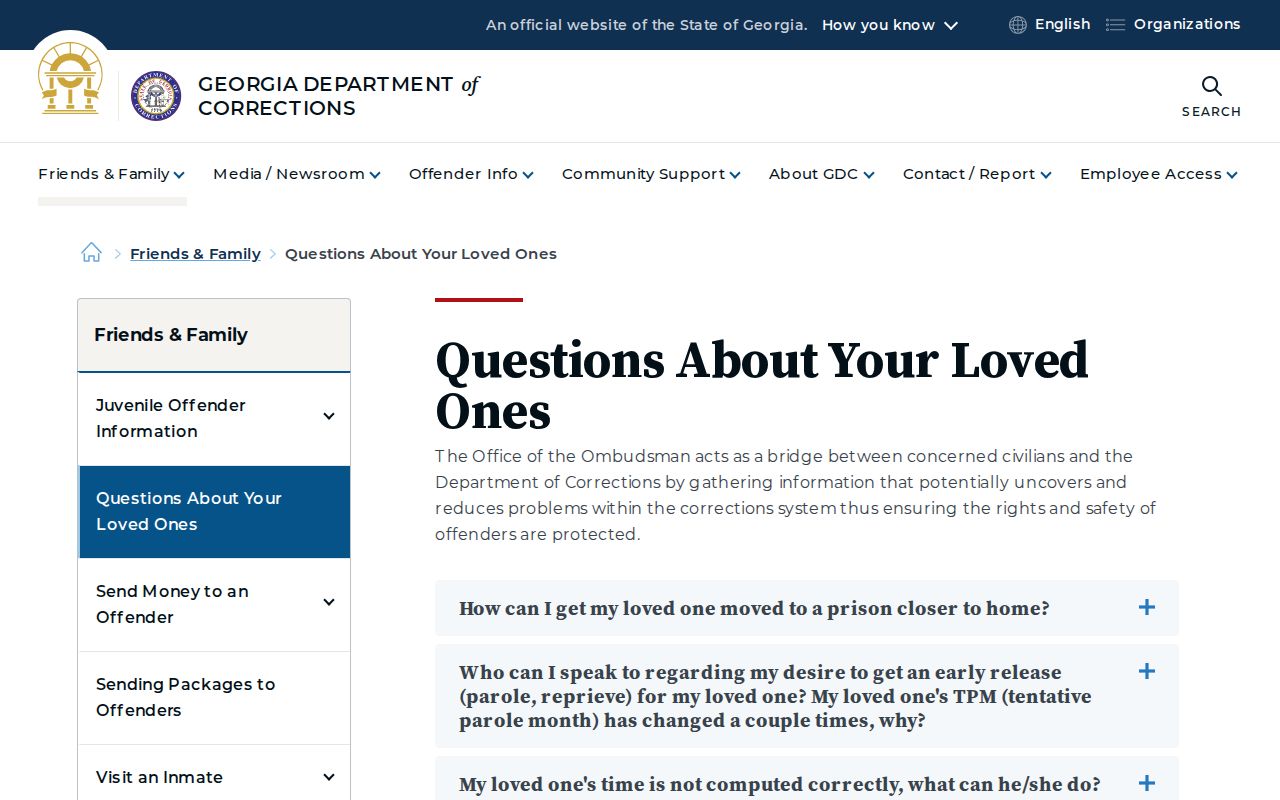
Use that contact route after reviewing the public result and recording the GDC ID.
When several GDC entries appear, match the GDC ID, age, physical description, Stewart conviction, case number, offense, sentence length, and incarceration history. A shared name is not enough. If the conviction county differs, determine whether the record concerns another case or person.
State records can show more than one prison period. The most recent institution is not always tied to an older release date. Read the history in date order and connect each sentence to the proper case. This prevents an old release date from being mistaken for the end of a new active sentence.
A GDC discharge and parole are not the same. Discharge generally means the relevant sentence obligation has ended, while parole is conditional release before full expiration. DCS can confirm the supervision office, but the Parole Board remains the decision source.
Save the public result with the date checked, then seek written confirmation when an exact release fact matters. The agency warning is important because later corrections may change a field. A court judgment shows the sentence imposed, but GDC computes and records prison custody. Compare both sources when a sentence date and the public offender result seem inconsistent.