
Where Federal Releases Go
A sentenced federal inmate may leave BOP custody after sentence completion, halfway-house or prerelease placement, or another federal custody event. A locator release date concerns BOP custody. It does not prove that county, Georgia, ICE, or community-supervision issues are absent. The same person can have records in more than one system at different times.
Federal pretrial defendants often pass through U.S. Marshals custody and contract or local beds before any BOP designation. In that stage, the court docket, defense counsel, and known holding facility are more useful than a BOP search. A transfer into BOP is not release to the community, just as movement from BOP into another lawful hold may not be full release.
Confirm a Federal Release
BOP's Inmate Locator covers federal inmates incarcerated from 1982 to the present. Search by register number, DCDC number, FBI number, INS number, or by name with age, race, and sex. A number search is usually the clearest route. Compare the identity and read the displayed date and custody wording precisely.
- Confirm that the case is federal and that the person reached BOP custody.
- Search the strongest federal identification number available.
- If using a name, compare age, race, and sex to avoid a false match.
- Record the release date or not-in-custody statement exactly as displayed.
- Check the federal court docket for the sentence and later orders.
- Use FOIA or the responsible federal office when more record detail is needed.
The Stewart County release guide helps separate this route from the county jail, GDC, and ICE paths.
Federal Locator Record Fields
The BOP result is narrower than a full criminal case file. Its value is federal identity and custody timing.
| Field | Use |
|---|---|
| Register or agency number | Identifies the federal inmate record. |
| Name and descriptors | Help distinguish similar names. |
| Release date | Shows a past event or projected BOP date. |
| Custody wording | States whether the person is in BOP custody. |
| Federal court case | Explains sentence and later judicial orders. |
BOP warns that sentence reviews and recalculations under the First Step Act can affect release-date accuracy. Check again when a date is still in the future. A past date is evidence of release from BOP, not a universal clearance from every other authority.
The official BOP inmate-records explanation shown below describes the scope of locator records.
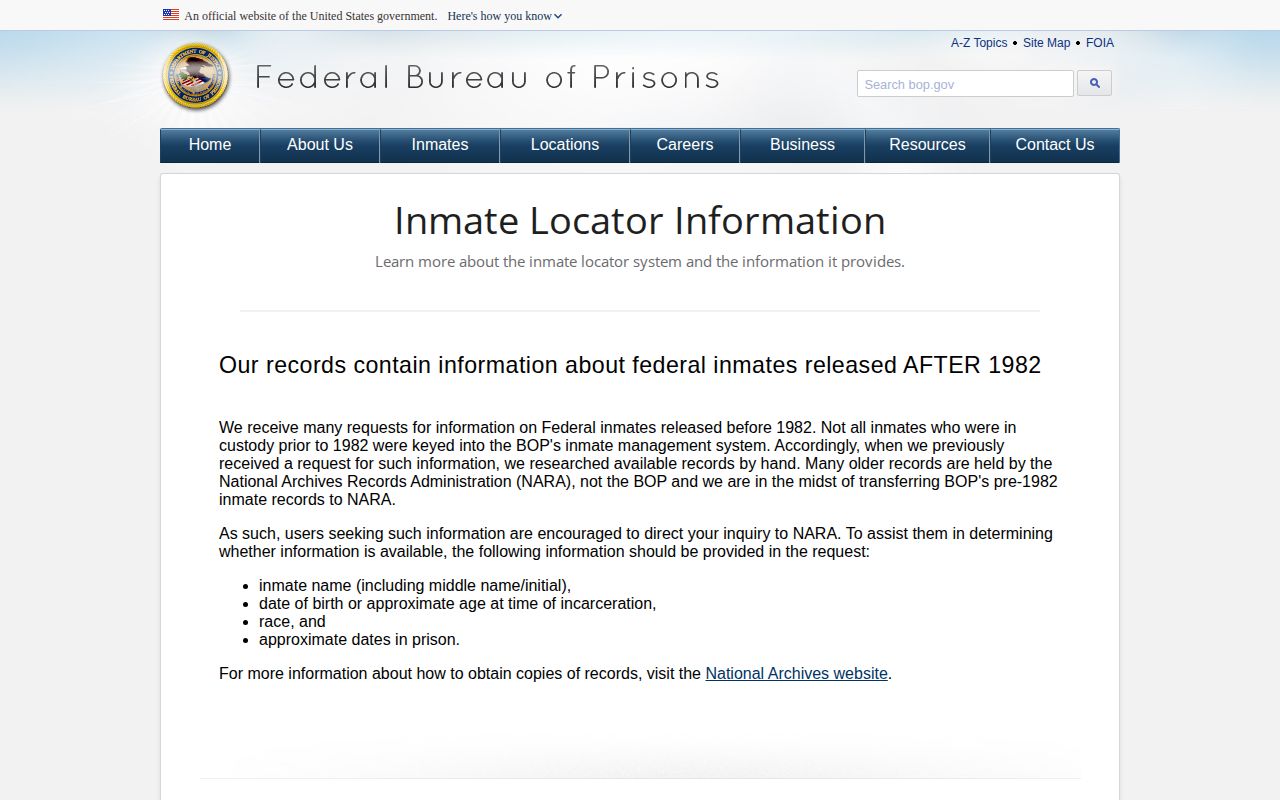
Its federal-only scope is why a Stewart County jail or ICE question must use a different route.
Federal Pretrial Custody Gaps
The U.S. Marshals Service assumes custody of people arrested by federal agencies and houses or transports prisoners through acquittal or incarceration. It does not offer a general public person locator equal to BOP's tool. A federal defendant may therefore be absent from BOP while still held under federal authority.
Start with the federal court docket to confirm case status, detention orders, sentencing, and designated counsel. If a local or contract facility is named, contact that facility through its official channel. Counsel can work through USMS for custody facts that are not public. Once a sentenced person receives a BOP record, switch to the BOP locator for prison placement and release timing.
Federal and ICE Records Differ
Stewart Detention Center is operated for ICE immigration detention. Its presence in Lumpkin can cause confusion with federal criminal custody. ICE's Online Detainee Locator System uses A-number and country of birth, or name, country of birth, and date of birth. BOP uses federal prison identifiers or name and descriptors. The tools are not substitutes.
An ICE detention release, transfer, or removal may never create a BOP record. Conversely, a BOP release date does not explain a later ICE hold. When both systems may be involved, build a timeline from the BOP result, ICE locator, immigration court, and federal criminal docket. Use the date and agency on each record.
Obtain Federal Release Records
For detail beyond the locator, identify which federal component created the record. BOP holds federal prison records. The court maintains filed orders and judgments. USMS controls many transport and pretrial custody records. A focused FOIA request should name the person, identifier, date range, institution or district, and exact document sought.
Federal privacy and law-enforcement rules may limit what can be released about another person. Public court dockets may still supply the judgment, sentence, and later orders. Do not ask Stewart County to produce a BOP or USMS record it did not create. County records are useful only when a federal detainee was actually held in a local facility and that local agency created responsive documents.
Georgia's record-restriction resource appears in the matching image below, but it addresses Georgia records rather than erasing a federal BOP record.
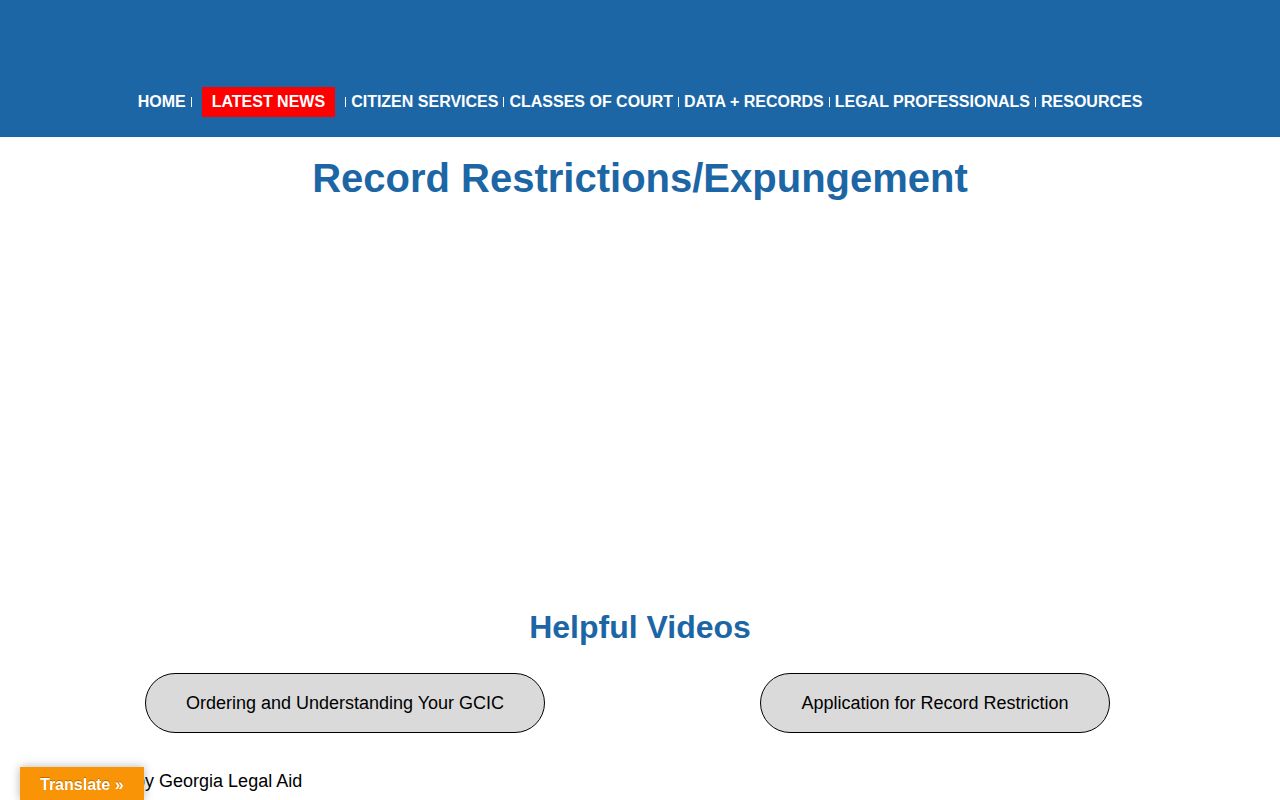
The state page reinforces the jurisdiction boundary: federal and Georgia records have separate custodians and procedures.
Federal Records Contact Route
There is no Stewart County federal prison facility to call. Use the national BOP locator for sentenced inmates, the relevant federal court for case filings, and counsel or the known facility for USMS-stage custody. Preserve the register number and exact result date before requesting more detail.
Federal Custody Sources
BOP locator: Federal Inmate Locator
Coverage: Federal inmates from 1982 to present
Pretrial route: Federal court docket, counsel, known holding facility, and USMS as appropriate
ICE-only custody: ICE Online Detainee Locator System, not BOP
A federal release result should be reported with its scope intact. “Not in BOP custody” means precisely that. It does not establish current status in the Stewart County jail, GDC, ICE, another county, or a supervision system.
For a projected date, save the date checked and return to the locator because sentence calculations can change. Court orders, earned credits, and agency work may alter the display. Once the date passes, look for updated custody wording rather than assuming the event occurred.
For a past release, compare the BOP result with the federal judgment and later docket orders. The judgment explains the sentence, while the locator records the prison result. Federal supervised release is a court sentence component and differs from Georgia parole.
Records from before 1982 fall outside the locator's stated coverage. Older federal custody research may require archival BOP material, court files, or a focused records request. State portals cannot fill that gap merely because the person lived in Stewart County.
When requesting a federal record, avoid asking broadly for every document. Name the judgment, release computation, custody history, or transfer record needed and supply the register number. A narrow request helps the agency locate the correct file and explain any withheld part. Keep the response with the locator result and court docket so each fact retains its source and date.